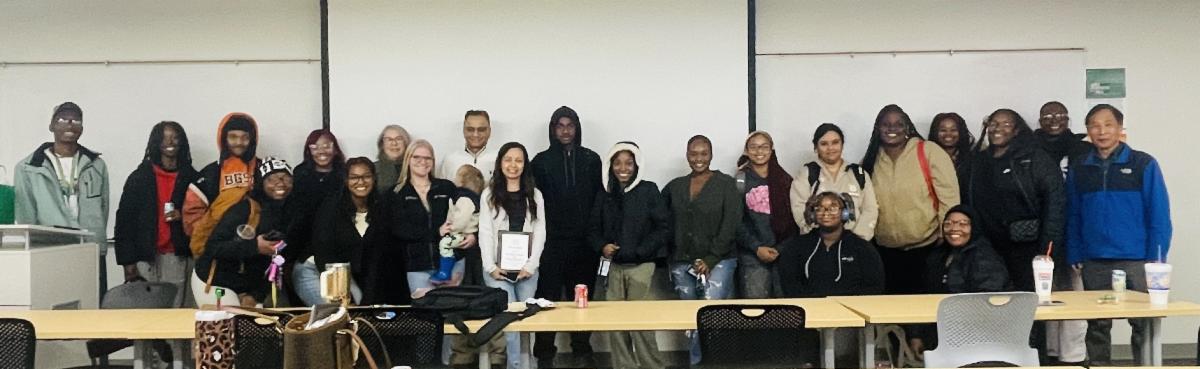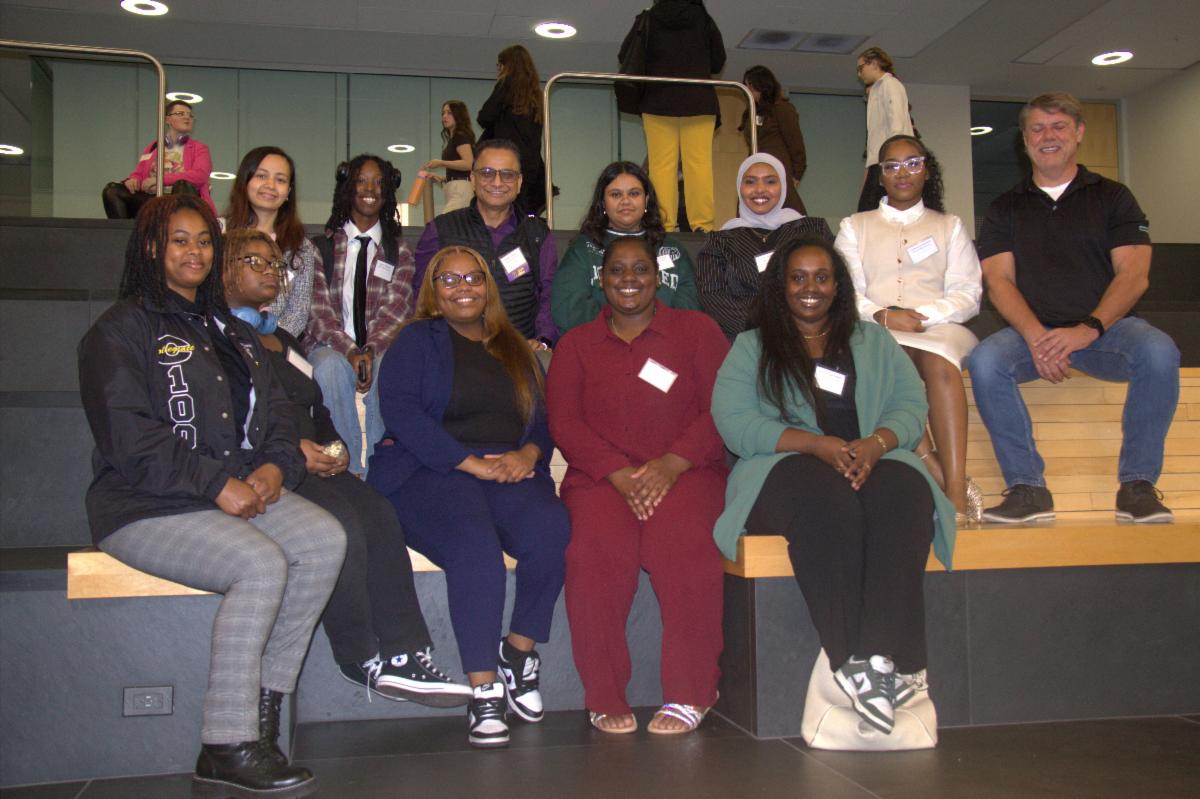
Thirty student researchers and 20 faculty mentors advanced hands-on projects spanning
health, agriculture, artificial intelligence, and more.
FRANKFORT, Ky. — From influenza and maternal mortality to animal health and artificial
intelligence in clinical settings, undergraduate researchers at Kentucky State University
spent Fall 2025 tackling real-world questions alongside faculty mentors—building skills,
confidence, and career clarity through applied, interdisciplinary work.
 The Undergraduate STEM Research Program concluded the semester with 30 Undergraduate
Research Assistants, known as URAs, and 20 faculty mentors. Students ranged from first-year
to senior levels and represented majors across STEM, agriculture, business, and the
social sciences, reflecting the program’s campus wide reach.
The Undergraduate STEM Research Program concluded the semester with 30 Undergraduate
Research Assistants, known as URAs, and 20 faculty mentors. Students ranged from first-year
to senior levels and represented majors across STEM, agriculture, business, and the
social sciences, reflecting the program’s campus wide reach.
The program pairs undergraduates with faculty mentors working in related fields and
provides meaningful research exposure across laboratory, field, community-based, and
social science settings. In addition to mentorship, participants receive a stipend
for research hours and fully funded travel for conferences and educational experiences.
The semester began with an August 18 orientation session, followed by seven biweekly
cohort meetings where students shared research updates, identified challenges, and
tracked progress. Sessions also included guest speakers and activities focused on
strengthening core competencies, including research communication, preparing for graduate
school, effective poster design, and mixed research methods.
Computer science major Pranjalee Dahal said the biweekly meetings boosted her confidence
in both research and public speaking.
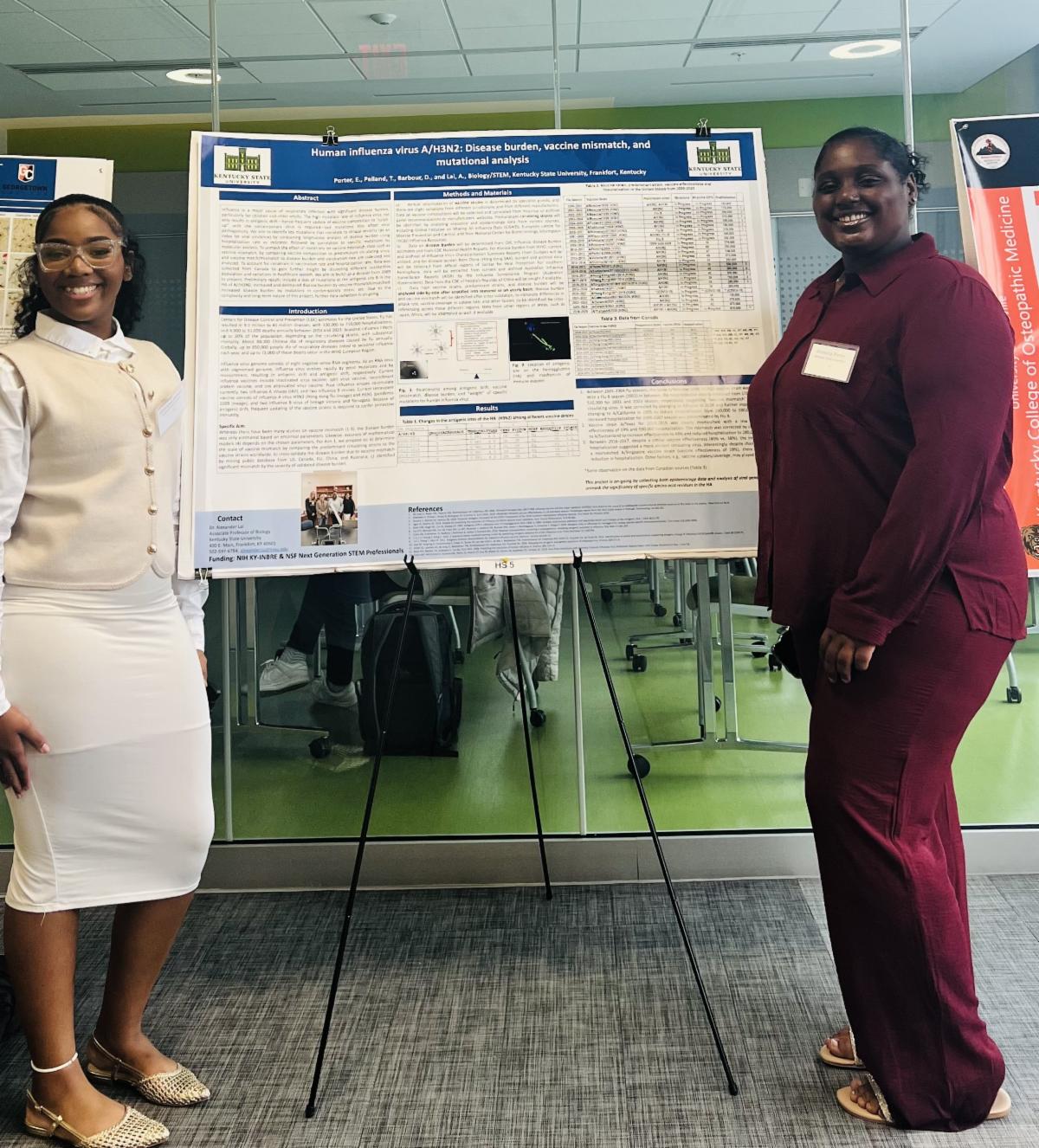
 For biology pre-medicine major Erionna Porter, influenza research sharpened her analytical
skills and strengthened her understanding of population health. Nursing major John
Frost said he was able to connect his information technology background with healthcare
by exploring how artificial intelligence can support clinical practice.
For biology pre-medicine major Erionna Porter, influenza research sharpened her analytical
skills and strengthened her understanding of population health. Nursing major John
Frost said he was able to connect his information technology background with healthcare
by exploring how artificial intelligence can support clinical practice.
Other projects brought students into the field and into community-centered inquiry.
Agricultural business major Kayla Tingle said she gained field and lab techniques
for identifying parasite concerns in animals. Psychology pre-med student Narimane
Kayed Mahamoud said contributing to maternal mortality research in Kentucky strengthened
her commitment to improving women’s health locally and globally.
USDA 1890 Scholar Sienna Stewart connected her climate-related research to her “lifelong passion for nature and curiosity about human impacts on the environment.”
Shikha Acharya, said the semester offered visible, measurable growth in a short period of time.
“Providing students with these opportunities is incredibly meaningful, and it makes me proud to see how passionately they talk about their research,” Acharya said. “Even within a single semester, you can see how much they grow in confidence, skills, and excitement for their fields.”
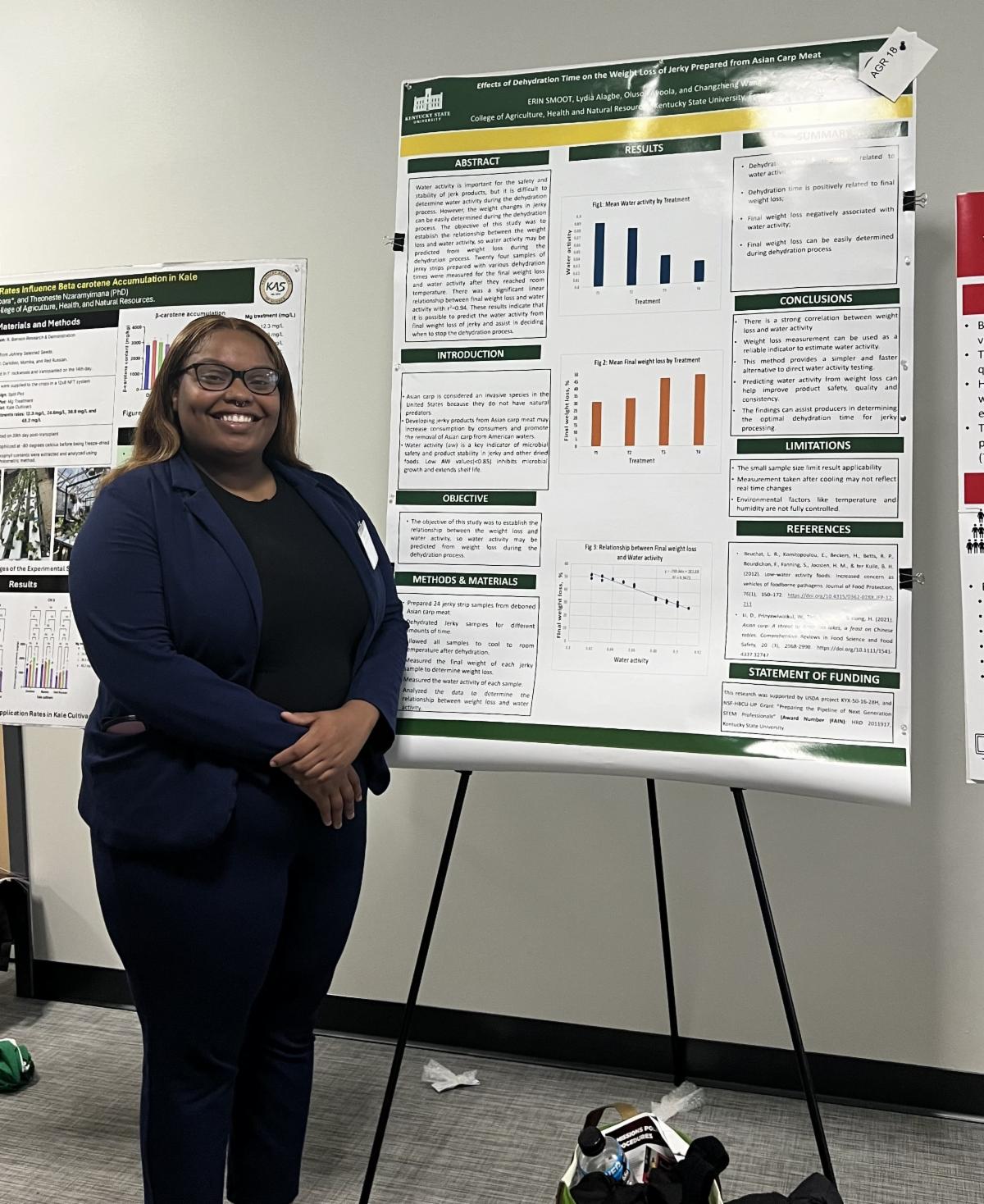
Based on their work, 13 URAs presented posters or delivered oral presentations at the Kentucky Academy of Science Conference. In December 2025, the program also coordinated an experiential 10-day trip to Peru, expanding opportunities for immersive learning and global engagement. Student research this semester spanned public health, agriculture, artificial intelligence, environmental studies and business innovation.
Students said the experience strengthened both technical skills and professional confidence. Sonia Mugorewera credited the program with helping her “think more critically, collaborate effectively, and improve my research skills.” For Jyni Woodson, sharing findings became “an essential part of scientific communication,” while Sumaiyah Johnson said the work strengthened “problem-solving, data analysis, project management, and effective communication” skills.
Hands-on research also reinforced long-term goals. TyMeisha Smith said farm and field experience “strengthened my commitment to this field.” Timiyah Roberson said her project aligns with her plan to pursue graduate studies in medical or biomedical sciences.
The final biweekly meeting was held on December 5, officially wrapping up the semester. Students are evaluated based on research progress, attendance and commitment, and those in good standing may continue in upcoming semesters.
The program is led by Dr. Buddhi Gyawali, with funding support from the National Science Foundation HBCU-UP grant, the U.S. Department of Energy GAEC-MSI Geospatial-Artificial Intelligence Enhanced Curriculum Program, and the U.S. Department of Agriculture NextGen Program. Kabita Paudel coordinates the program, and Gae Broadwater serves as grant evaluator.
Applications will reopen for the Spring 2026 semester. Students are encouraged to monitor University communications for updates and apply early. For questions about the program or the application process, contact Kabita Paudel at kabita.paudel1@kysu.edu or Dr. Buddhi Gyawali at buddhi.gyawali@kysu.edu.